Marine Load Testing, Offshore Proof Load Testing & Certification Support
Our service support covers marine cranes, lifeboat davits, rescue boat davits, winches, capstans, windlasses, pad eyes, mooring bollards, towing points, shackles, slings, lifting beams, spreader beams, gangways, accommodation ladders, offshore baskets and custom fabricated load-bearing structures.
Marine Load Testing, Offshore Proof Load Testing & Certification Support in UAE
Proof load testing is a critical safety and compliance requirement for marine, offshore, oil & gas, port, shipyard, industrial and energy-sector operations. Equipment used for lifting, towing, mooring, pulling, securing, launching, personnel transfer or load-bearing applications must be tested and verified before it is placed into service.
In marine and offshore environments, failure of lifting or load-bearing equipment can result in operational delays, equipment damage, safety incidents, vessel detention, failed inspection or project non-compliance. Proper proof load testing helps confirm that the equipment can safely withstand the required test load and perform as intended under controlled conditions.

Contact us : +971522554321 | +971502304321 | +971526634321 | +971522464321
Email : support@adnicomarine.com
www.adnicomarine.com
Types of Proof Load Testing We Support
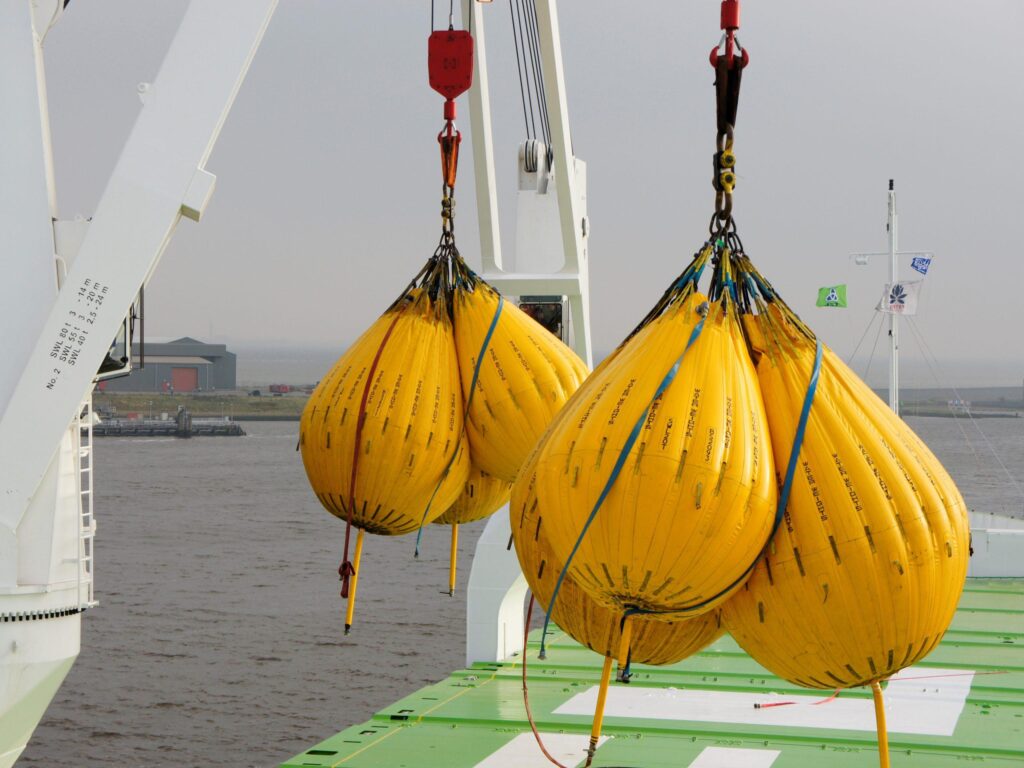
Marine Crane Proof Load Test
ADNICO MARINE supports marine crane proof load testing in UAE for vessels, offshore units, shipyards, ports, terminals and marine construction sites. This service helps verify the lifting performance, structural integrity and safe working condition of cranes used for cargo handling, provision lifting, deck operations and offshore support activities.
- Deck cranes proof load test
- Ship cranes proof load test
- Provision cranes proof load test
- Cargo cranes proof load test
- Knuckle boom cranes proof load test
- Offshore pedestal cranes proof load test
- Jib cranes proof load test
- Boat hoists proof load test
- Mobile boat hoists proof load test
- Shipyard cranes proof load test
- Dockside cargo cranes proof load test
The test may involve water bags, test weights, load cells or other suitable arrangements depending on the capacity and site condition.
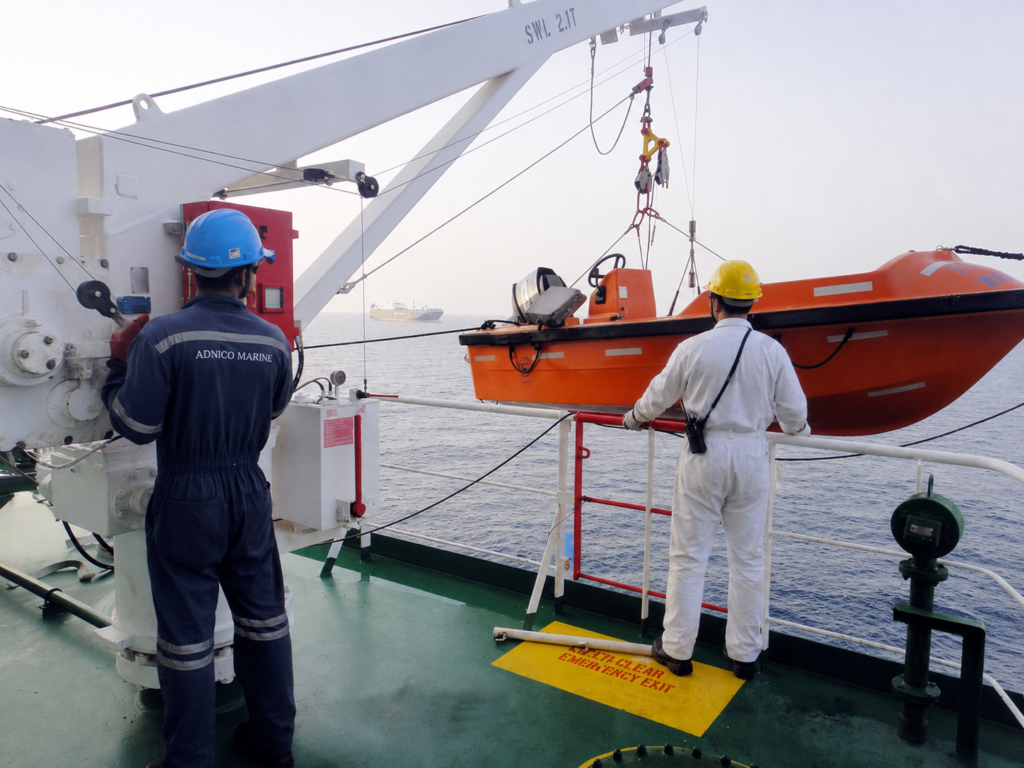
Lifeboat Davit & Rescue Boat Davit Proof Load Test
We support lifeboat davit load testing and rescue boat davit proof load testing for vessels, offshore units and marine safety equipment. Davit testing is highly important because it is directly connected to lifesaving appliance readiness, emergency response and vessel safety compliance.
- Lifeboat davits proof load test
- Rescue boat davits proof load test
- Fast rescue craft davits proof load test
- Davit arms proof load test
- Winches proof load test
- Fall wires proof load test
- Hooks proof load test
- Brake holding performance proof load test
- Lowering and hoisting function proof load test
- Loaded operational trials proof load test
This is a high-demand service for vessels because davits are directly connected to lifesaving and emergency response systems.
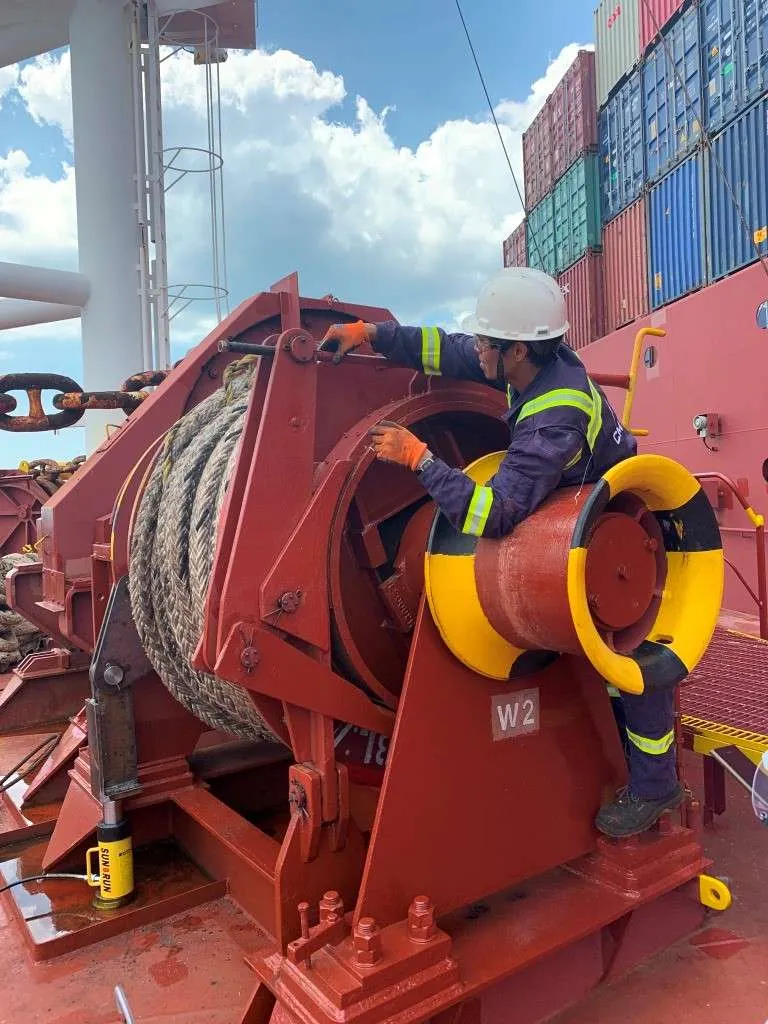
Winch, Capstan & Windlass Proof Load Test
Winches, capstans and windlasses are critical for mooring, towing, anchoring and deck operations. Proof load testing helps confirm that the equipment can safely perform its required pulling or holding function.
- Mooring winches proof load test
- Towing winches proof load test
- Anchor windlass systems proof load test
- Capstans proof load test
- Survey vessel winches proof load test
- Deck winches proof load test
- Jib crane winches proof load test
- Pulling arrangements proof load test
This category is highly relevant for tugboats, barges, offshore vessels, dredgers, workboats, port operators and marine contractors.
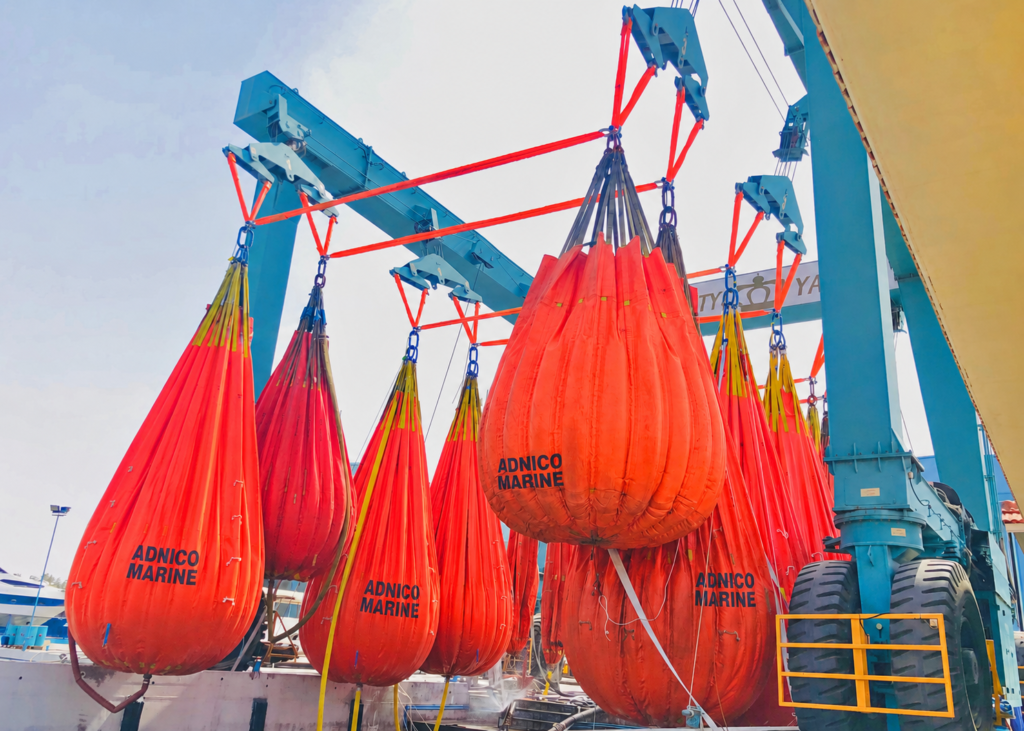
Spreader Beam, Lifting Beam & Lifting Frame Load Test
Spreader beams and lifting beams are used for engineered lifting operations, heavy lifting, machinery handling, offshore fabrication and shipyard work.
- Spreader beams proof load test
- Lifting beams proof load test
- Lifting bars proof load test
- Lifting frames proof load test
- A-frames proof load test
- Custom lifting structures
- Engineered lifting arrangements
- Fabricated heavy-lift beams
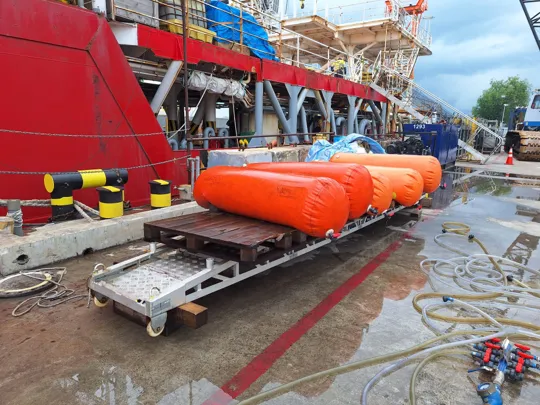
Gangway & Accommodation Ladder Load Test
Gangways and accommodation ladders are essential access systems for vessels, offshore units, shipyards and marine terminals. Load testing helps verify safe access for crew, visitors, surveyors and workers.
- Ship gangways proof load test
- Accommodation ladders proof load test
- Marine access ladders proof load test
- Platform access equipment proof load test
- Boarding arrangements proof load test
- Vessel access systems proof load test
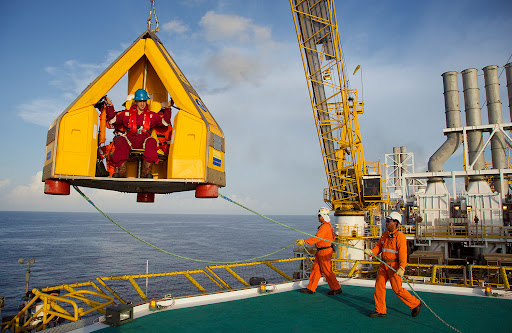
Offshore Basket & Personnel Transfer Equipment Load Test
Offshore personnel transfer equipment is safety-critical and must be inspected, tested and certified before use.
- Personnel baskets proof load test
- Man baskets proof load test
- Offshore transfer baskets
- Cargo baskets proof load test
- Tool baskets proof load test
- Cylinder racks proof load test
- Skips proof load test
- Crew transfer baskets proof load test
- Offshore lifting baskets proof load test
Proof Load Test Services in UAE for Marine, Offshore & Energy Sectors
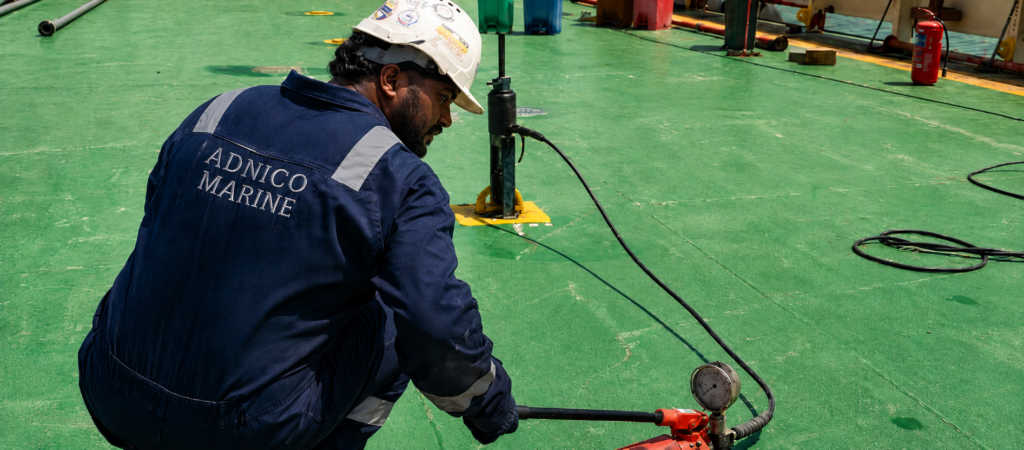
Pad Eye & Lifting Point Proof Load Test
Pad eyes and lifting points are widely used in marine, offshore, shipyard and fabrication operations. They must be tested before use, especially after welding, fabrication, repair, installation or modification.
- Deck pad eyes proof load test
- Welded lifting points proof load test
- Lifting lugs proof load test
- Engine room lifting points proof load test
- Offshore pad eyes proof load test
- Fabricated anchor points proof load test
- Temporary lifting points proof load test
- Vessel lifting attachments proof load test
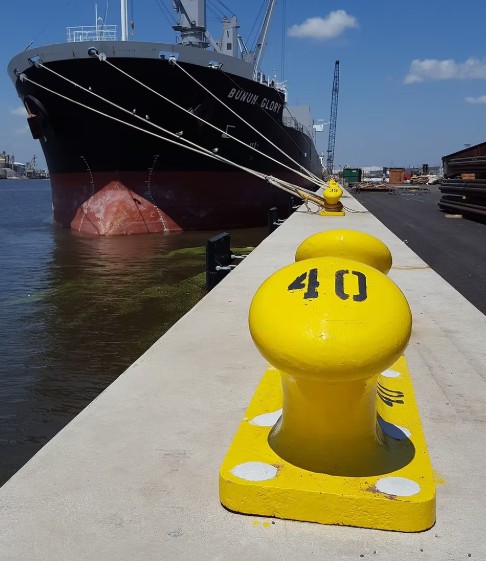
Mooring Bollard & Towing Point Proof Load Test
Mooring bollard proof load testing verifies the strength of fixed bollards, towing points, mooring fittings, towing brackets and load-bearing structures.
- Port bollards proof load test
- Quay bollards proof load test
- Mooring fittings proof load test
- Towing brackets proof load test
- Vessel-mounted towing points
- Offshore support base fittings
- Jetty and terminal mooring points
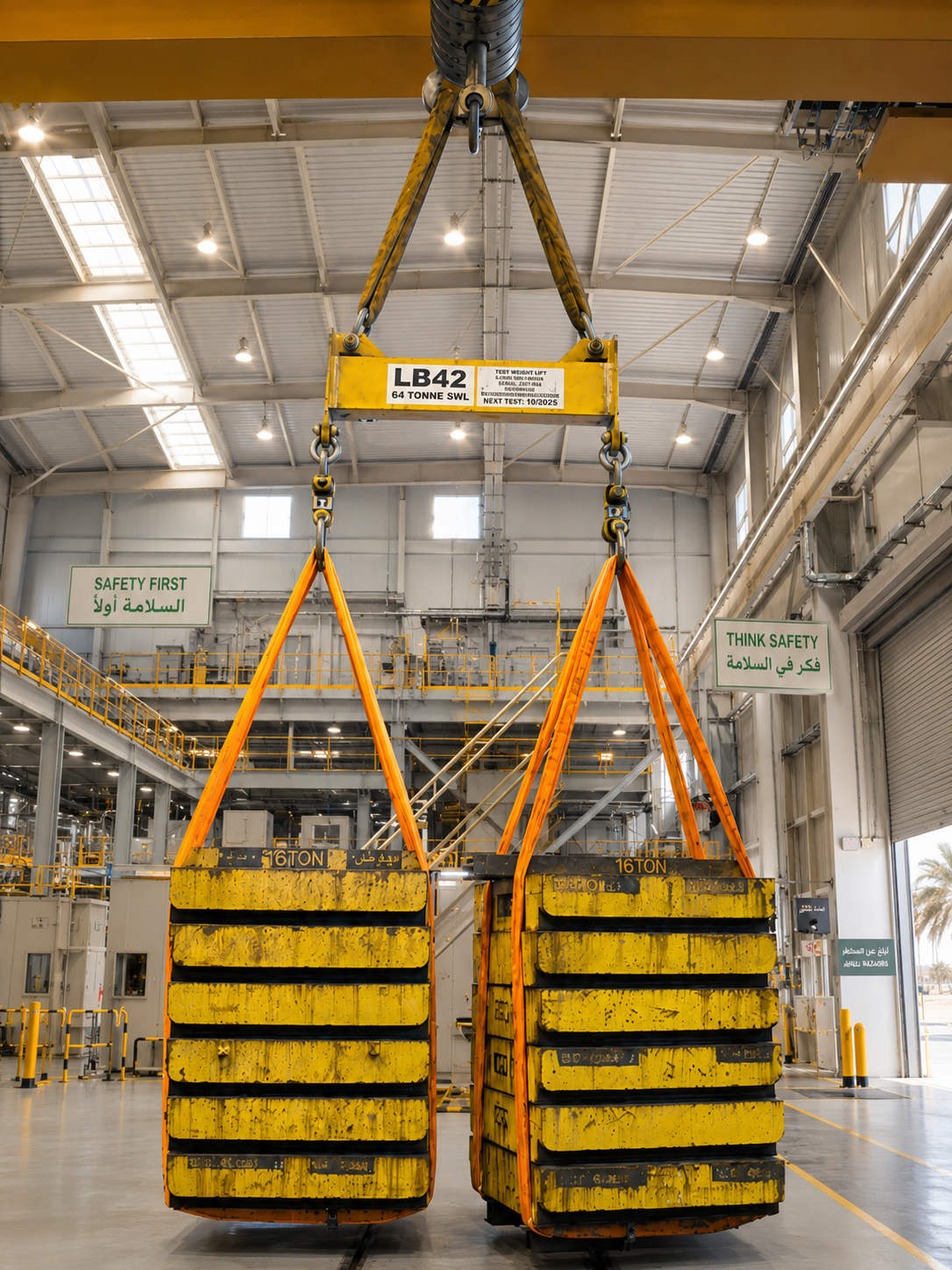
Lifting Gear & Rigging Proof Load Test
Lifting gear and rigging equipment must be inspected and tested to verify safe use in lifting operations.
- Shackles proof load test
- Web slings proof load test
- Wire rope slings proof load test
- Chain slings proof load test
- Hooks proof load test
- Eyebolts proof load test
- Master links proof load test
- Beam clamps proof load test
- Chain blocks proof load test
- Lever hoists proof load test
- Snatch blocks proof load test
- Drum lifters proof load test
- Jacks proof load test
- Loose lifting gear proof load test
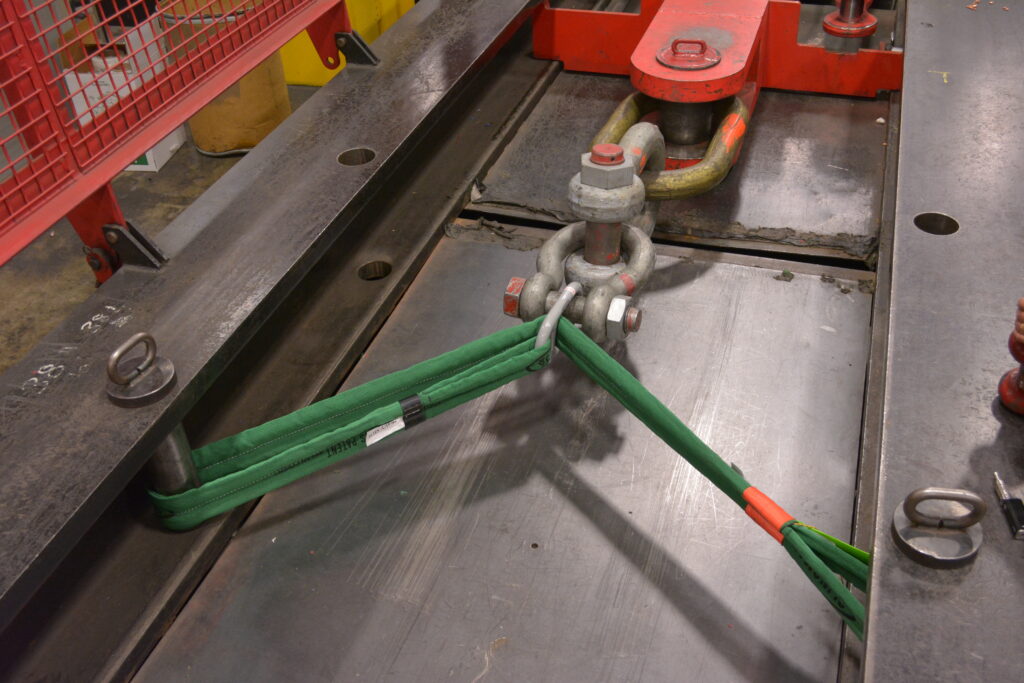
Custom Fabricated Structure Proof Load Test
Custom fabricated structures used in marine, offshore and energy projects may require proof load testing before operational use.
- Fabricated lifting frames proof load test
- Transport frames proof load test
- Machinery skids proof load test
- Structural brackets proof load test
- Custom lifting lugs proof load test
- Engineered supports proof load test
- Temporary lifting structures proof load test
- Offshore fabricated assemblies proof load test
- Special project structures proof load test
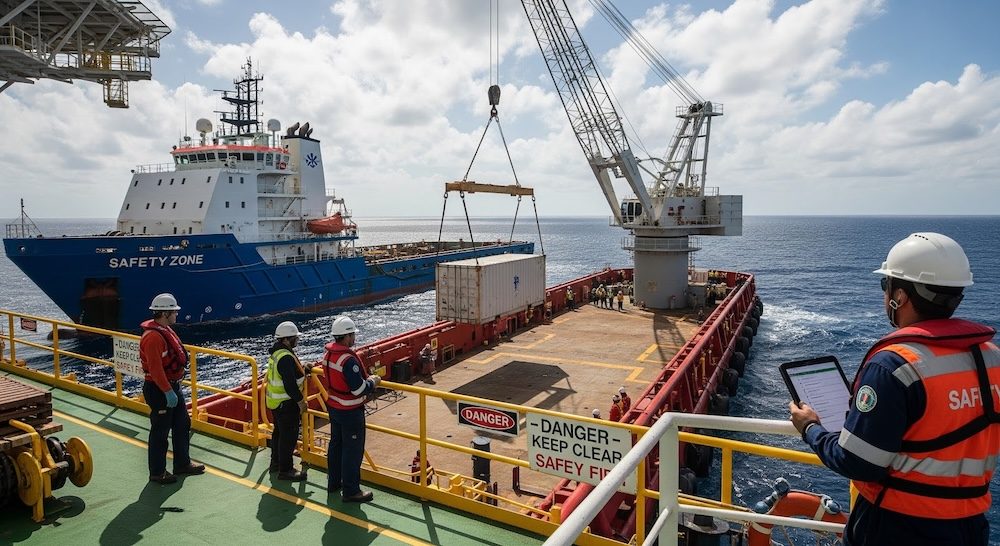
Container, Cargo Basket & Skid Frame Load Test
ADNICO MARINE supports cargo basket load testing, skid frame proof load testing and offshore container load testing support for marine logistics, offshore projects, shipyards, fabrication yards and energy-sector contractors. These structures are commonly used for transporting tools, materials, cylinders, equipment and project cargo in demanding site conditions.
- Cargo baskets proof load test
- Offshore containers proof load test
- Tool baskets proof load test
- Cylinder racks proof load test
- Material skips proof load test
- Transport frames proof load test
- Machinery skids proof load test
- Offshore project frames proof load test
- Fabricated logistics frames proof load test
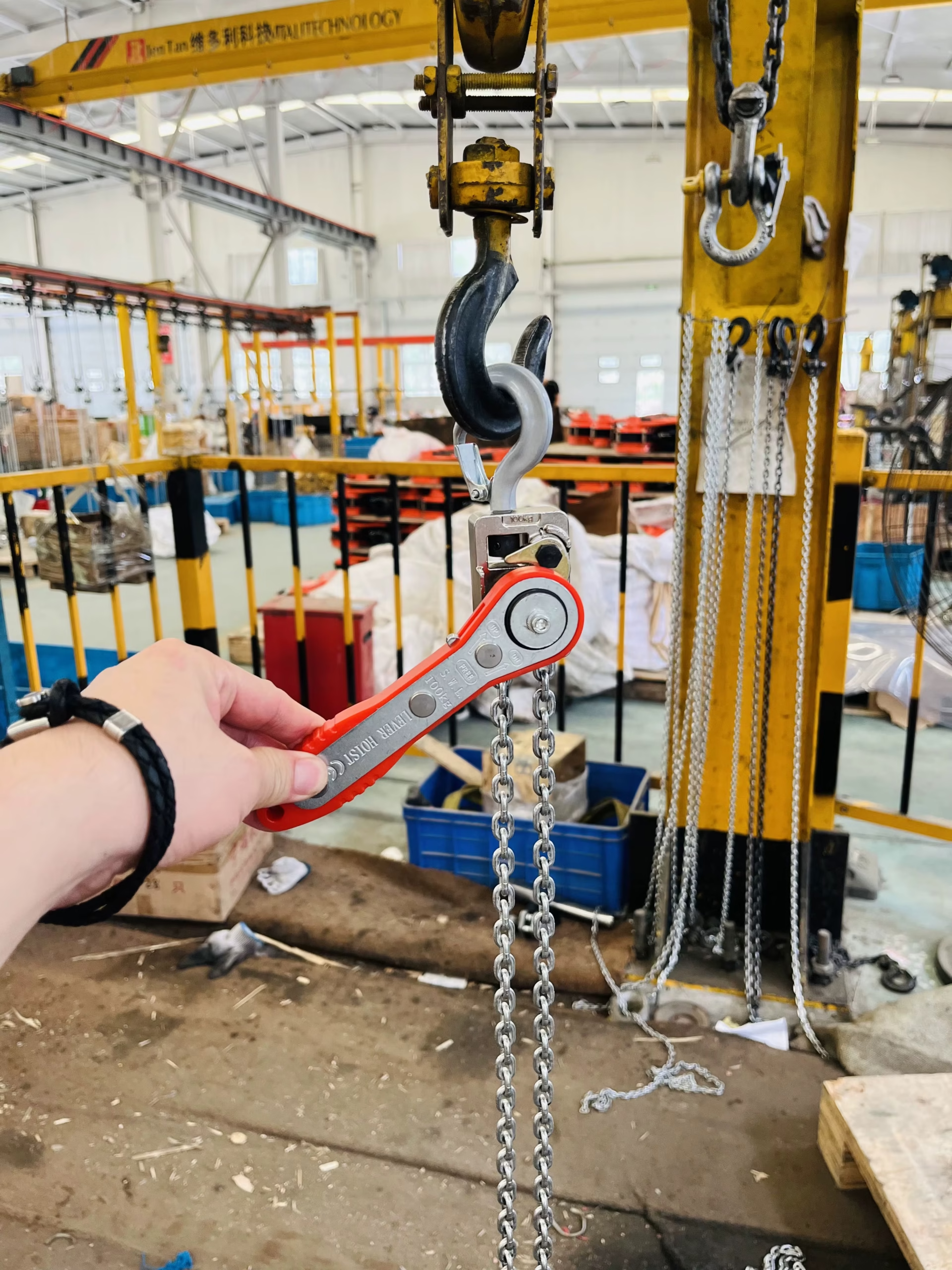
Chain Block, Lever Hoist & Manual Lifting Equipment Load Test
We support chain block load testing, lever hoist load testing and manual lifting equipment proof load testing for marine, offshore, shipyard, workshop and industrial applications. These items are regularly used for maintenance, engine room lifting, machinery handling, rigging works and temporary lifting operations.
- Chain blocks proof load test
- Lever hoists proof load test
- Manual hoists proof load test
- Trolley hoists proof load test
- Beam trolleys proof load test
- Pulling hoists proof load test
- Engine room lifting equipment
- Workshop lifting tools proof load test
Contact us : +971522554321 | +971502304321 | +971526634321 | +971522464321
Email : support@adnicomarine.com
www.adnicomarine.com
Article Outline
- Proof Load Test Services in UAE for Marine, Offshore & Energy Sectors
- What Is Proof Load Testing?
- Proof Load Testing in Simple Terms
- Why It Matters in Marine and Offshore Operations
- Why Proof Load Testing Is Required in the UAE
- Safety, Compliance, and Operational Continuity
- Class, Port, Client, and Project Requirements
- Equipment Covered Under Proof Load Testing
- Marine Cranes, Davits, Winches, and Windlasses
- Pad Eyes, Bollards, Lifting Points, and Rigging Gear
- Gangways, Accommodation Ladders, Baskets, and Custom Structures
- Common Proof Load Testing Methods
- Water Bags, Test Weights, Load Cells, and Hydraulic Testing
- Choosing the Right Method for Each Site
- Step-by-Step Proof Load Testing Process
- Requirement Review and Method Planning
- Inspection, Controlled Loading, and Certification
- Proof Load Testing for ADNOC, Offshore, Oil & Gas, and Energy Projects
- Documentation and Third-Party Inspection Support
- Why Choose ADNICO MARINE for Proof Load Test Coordination
- Marine-Focused Support Across the UAE
- Conclusion
- FAQs
- What Is Proof Load Testing?
Proof Load Test Services in UAE for Marine, Offshore & Energy Sectors
What Is Proof Load Testing?
Proof load testing is a controlled safety verification process used to confirm whether lifting equipment, marine structures, rigging gear, access systems, mooring fittings, towing points, davits, winches, cranes, and fabricated load-bearing items can safely withstand a specified test load. In simple business terms, it is the practical way to prove that an item is not just visually acceptable, but also structurally capable of performing its intended function under controlled loading conditions. This is especially important in marine, offshore, port, oil and gas, shipyard, industrial, and energy-sector environments where one small failure can create a chain reaction of delays, accidents, equipment damage, failed inspections, and project disruption.
For UAE marine and offshore operations, proof load testing is not just a technical activity; it is part of a wider risk-control framework. Equipment used for lifting, launching, securing, towing, pulling, mooring, personnel transfer, or load holding must be verified before critical use, after installation, after repair, after modification, and during periodic inspection cycles. ADNICO MARINE’s arrangements for service scope highlights support for marine cranes, lifeboat davits, rescue boat davits, winches, capstans, windlasses, pad eyes, mooring bollards, towing points, shackles, slings, lifting beams, gangways, accommodation ladders, offshore baskets, and custom fabricated structures across UAE marine and energy-sector environments.
Proof Load Testing in Simple Terms
Think of proof load testing like a controlled “stress interview” for equipment. A crane, davit, bollard, lifting lug, shackle, sling, or pad eye may look perfectly fine from outside, but visual appearance alone does not always tell the full story. Corrosion may be hidden, welds may have weakened, bolts may be loose, metal may have fatigue, and previous overloading may have left invisible damage. A proof load test applies a defined load under controlled conditions so that competent personnel can assess whether the item remains safe, stable, and fit for purpose.
During testing, the equipment may be checked for permanent deformation, cracks, weld failure, excessive deflection, structural movement, loose connections, hydraulic leakage, mechanical malfunction, or unsafe operating behavior. Depending on the equipment type and test requirement, the load may be applied using certified water bags, calibrated test weights, load cells, hydraulic cylinders, hydraulic test kits, test barges, or engineered rigging arrangements. After the load is applied and released, the item is inspected again to confirm that it has not suffered damage or unacceptable movement. When the scope is completed successfully, a report or certificate may be issued by the relevant competent testing or inspection authority.
Why It Matters in Marine and Offshore Operations
In marine and offshore work, equipment is not operating in a friendly environment. Saltwater, humidity, vibration, dynamic loading, corrosion, rough handling, confined workspaces, offshore weather, and heavy operational cycles all increase risk. A marine crane load test, lifeboat davit proof load test, or pad eye load test is not simply a paperwork requirement; it is a frontline safety control that helps protect people, vessels, assets, and project schedules. When a crane fails during cargo handling, or when a davit fails during emergency equipment operation, the impact can be serious and expensive.
This is why proof load testing becomes a practical business safeguard. Ship owners, ship managers, offshore contractors, port operators, terminal operators, shipyards, drydock facilities, dredging companies, marine construction firms, and oil and gas contractors all rely on tested and documented equipment to move operations forward with confidence. The global safety context is also clear: the International Labour Organization reports that 2.93 million workers die each year from work-related factors, while 395 million workers sustain non-fatal work injuries annually. Those numbers are a strong reminder that safety controls such as inspection, testing, and certification are not optional extras; they are part of responsible operations. (International Labour Organization)
Why Proof Load Testing Is Required in the UAE ?
Proof load testing in the UAE is driven by a combination of legal duties, client requirements, port authority expectations, class survey needs, third-party inspection standards, insurance conditions, consultant instructions, shipyard procedures, and internal HSE controls. The UAE places strong emphasis on occupational health and safety, and MoHRE guidance confirms that workplaces must implement preventive measures against injuries, occupational diseases, fire risks, and dangers arising from the use of equipment. This matters because lifting appliances, rigging gear, access systems, and load-bearing structures are among the most risk-sensitive assets on any marine or industrial site. (MOHRE)
A proof load test may be required before new equipment is placed into service, after structural repair, after fabrication, after welding, after installation, after modification, during periodic inspection, before offshore mobilization, or before a major project lifting activity. For example, a newly welded pad eye on a vessel deck may need proof load testing before it is accepted for use. A lifeboat davit may require inspection and operational testing as part of lifesaving appliance compliance. A mooring bollard may need load verification before being used for a specific marine operation. In each case, the objective is the same: reduce uncertainty before the equipment is trusted with a real load.
Safety, Compliance, and Operational Continuity
From a business continuity angle, proof load testing helps prevent expensive downtime. A failed inspection at the last minute can stop vessel mobilization, delay cargo handling, hold up drydock completion, interrupt oil and gas site work, or trigger additional consultant queries. In many cases, the cost of testing is small compared with the cost of vessel detention, standby charges, missed project windows, emergency repair, or rejected documentation. That is why proactive testing is usually smarter than reactive testing.
There is also a clear documentation benefit. A properly coordinated proof load test can generate records showing the equipment details, SWL or WLL, applied test load, method used, date, location, calibration references, inspection observations, witness details, and test outcome. These documents help procurement teams, project engineers, HSE officers, marine superintendents, class surveyors, consultants, and client representatives make faster decisions. The UK HSE’s LOLER guidance, while UK-specific, explains the broader principle well: thorough examinations and inspections are needed to verify that lifting equipment can continue to be safely used, with reporting and record-keeping obligations forming part of the safety system. (hse.gov.uk)
Class, Port, Client, and Project Requirements
In marine and offshore environments, proof load testing often sits at the intersection of several authorities and stakeholders. A vessel may be subject to flag requirements, class survey, port rules, terminal procedures, owner instructions, charterer requirements, consultant comments, and client HSE documentation. For lifeboats, rescue boats, launching appliances, and release gear, IMO Resolution MSC.402(96) is highly relevant because it addresses maintenance, thorough examination, operational testing, overhaul, and repair of lifeboats and rescue boats, launching appliances, and release gear. IMO’s latest Maritime Safety Committee resolution index also shows amendments connected to MSC.402(96), confirming that lifesaving appliance maintenance and testing remain a current regulatory focus. (International Maritime Organization)
For ADNOC-related, oil and gas, offshore, and energy-sector projects, the documentation expectations can be even tighter. Contractors may need method statements, risk assessments, calibration certificates, third-party inspection arrangements, lifting plans, HSE approvals, site access coordination, and client or consultant witness coordination. This is why safe website wording matters. Unless a company is officially approved for a specific service scope, it is better to say that it supports proof load testing coordination for ADNOC-related projects subject to client approval, appointed inspection authority requirements, and site-specific HSE procedures, rather than making broad “approved” claims.
Contact us : +971522554321 | +971502304321 | +971526634321 | +971522464321
Email : support@adnicomarine.com
www.adnicomarine.com
Equipment Covered Under Proof Load Testing
The scope of proof load test services in UAE can be broad because marine and offshore sites use many different load-bearing assets. Some equipment lifts cargo. Some launches lifesaving appliances. Some holds vessels in position. Some supports personnel access. Some forms part of a temporary or permanent engineered structure. The key point is that any item expected to carry, resist, pull, hold, transfer, or support load may require inspection and proof load verification depending on its use and governing requirement.
ADNICO MARINE’s arrangement for service positioning is strong because it covers both standard and non-standard marine load testing requirements. Many customers do not only ask for “crane load testing.” They may ask for davit load testing UAE, pad eye load test Dubai, mooring bollard proof load test, shackle load test UAE, sling proof load test, gangway load test, offshore basket certification, or custom fabricated structure proof load testing. A good service provider must be able to understand the equipment category first, then coordinate the correct testing method, inspection body, rigging team, and documentation package.
Marine Cranes, Davits, Winches, and Windlasses
Marine cranes are among the most common equipment requiring proof load testing. This can include deck cranes, ship cranes, provision cranes, cargo cranes, knuckle boom cranes, offshore pedestal cranes, jib cranes, boat hoists, mobile boat hoists, shipyard cranes, and cargo-handling dockside cranes. The test method may involve water bags, test weights, load cells, or other engineered loading arrangements depending on capacity, available space, site restrictions, and safety controls. A marine crane proof load test helps verify lifting performance, structural integrity, braking response, boom behavior, hydraulic stability, and general safe operating condition.
Davit testing is equally critical because lifeboat davits, rescue boat davits, fast rescue craft davits, and related launching systems are directly connected to emergency preparedness. Testing may involve davit arms, winches, fall wires, hooks, lowering and hoisting functions, brake holding performance, loaded operational trials, and visual inspection before and after loading. Winches, capstans, and windlasses also require attention because they are used for mooring, towing, anchoring, deck pulling, and vessel operations. A mooring winch, towing winch, anchor windlass, capstan, survey vessel winch, deck winch, or pulling arrangement may require proof load testing to confirm that it can safely perform its pulling or holding function under expected conditions.
Pad Eyes, Bollards, Lifting Points, and Rigging Gear
Pad eyes and lifting points are widely used in marine, offshore, shipyard, and fabrication operations. They may be installed on decks, engine rooms, offshore structures, transport frames, machinery skids, or temporary lifting arrangements. A pad eye proof load test is especially important after welding, installation, modification, or repair because the integrity of the weld and surrounding structure must be verified before the point is used for lifting or securing. The same applies to lifting lugs, anchor points, fabricated brackets, and custom load-bearing attachments.
Mooring bollards and towing points form another important category. A mooring bollard proof load test verifies the strength of a fixed bollard, towing bracket, quay fitting, vessel-mounted towing point, or load-bearing mooring structure. This is different from a bollard pull test. A proof load test checks whether the bollard or structure can withstand the required applied load, while a bollard pull test measures the pulling power of a vessel. Lifting gear and rigging accessories such as shackles, web slings, wire rope slings, chain slings, hooks, eyebolts, master links, beam clamps, chain blocks, lever hoists, snatch blocks, drum lifters, jacks, and loose lifting gear may also require inspection, testing, and certification before use.
Gangways, Accommodation Ladders, Baskets, and Custom Structures
Gangways and accommodation ladders are sometimes underestimated, but they are safety-critical access systems. Crew, surveyors, visitors, inspectors, technicians, and client representatives may use them daily during vessel calls, drydock periods, offshore works, and port operations. A gangway load test or accommodation ladder load test helps verify that the access system is safe for boarding and operational use. If a gangway fails, the consequence is not just equipment damage; it can involve personnel injury, access shutdown, and major operational disruption.
Offshore baskets and personnel transfer equipment also require disciplined control. Personnel baskets, man baskets, offshore transfer baskets, cargo baskets, tool baskets, cylinder racks, skips, and crew transfer baskets are used in demanding offshore environments where lifting and transfer activities must be carefully documented. Custom fabricated structures such as lifting frames, transport frames, machinery skids, structural brackets, engineered supports, temporary lifting structures, and offshore fabricated assemblies may require project-specific proof load testing before acceptance. This is where experience matters because non-standard structures often need a tailored method statement, engineered rigging arrangement, suitable load application method, and competent inspection support.
Common Proof Load Testing Methods
There is no one-size-fits-all method for proof load testing. The right method depends on the equipment type, capacity, location, available access, lifting radius, site limitations, class or client requirement, HSE restrictions, and whether the item is portable, fixed, welded, hydraulic, structural, or operational. A marine crane on a vessel may need water bags. A pad eye may need a hydraulic test kit. A bollard may require a controlled pulling arrangement with calibrated load measurement. A lifting beam may need calibrated test weights or an engineered rigging setup.
The most practical proof load testing providers start with the question: “What are we proving, and how can we prove it safely?” That approach avoids unnecessary complexity and reduces site risk. For example, using heavy test weights may be practical in a workshop or yard, but difficult on a vessel with limited deck access. Water bags may be ideal for crane and davit testing because they can be filled gradually and controlled, but they still require water supply, drainage planning, rigging safety, and load monitoring. Hydraulic testing may be suitable for fixed structures but must be carefully controlled to avoid shock loading or misalignment.
Water Bags, Test Weights, Load Cells, and Hydraulic Testing
Water bag load testing is commonly used for cranes, davits, lifeboat systems, and marine lifting appliances. Water bags offer flexibility because the load can be increased gradually by filling the bag, allowing controlled application of test weight. This is particularly useful where transporting solid test weights is difficult or where deck loading needs to be managed carefully. Calibrated test weight load testing is suitable where fixed weights can be safely delivered, positioned, lifted, and removed. It is often used for smaller equipment, workshop testing, yard testing, and certain lifting appliances.
Load cell or dynamometer testing is used to measure the force applied during pulling, lifting, mooring, rigging, or towing-related tests. This method is valuable when the applied force must be recorded accurately and when the test setup involves a pulling line rather than direct dead weight. Hydraulic test kit or cylinder testing is commonly used for pad eyes, bollards, lifting points, and fixed structures where a controlled load can be applied using hydraulic force. In special cases, a test barge, site-based heavy load arrangement, or engineered rigging setup may be required for high-capacity cranes, marine equipment, or non-standard structures.
Choosing the Right Method for Each Site
Depending on the equipment and site condition, the test method may include:
Water Bag Load Testing
Suitable for cranes, davits, lifeboat systems and marine lifting appliances.
Calibrated Test Weight Load Testing
Used where fixed weights or counterweights are practical and safe.
Load Cell / Dynamometer Testing
Used to measure applied force during pulling, lifting or rigging tests.
Hydraulic Test Kit / Cylinder Testing
Common for pad eyes, bollards, lifting points and fixed structures.
Test Barge / Site-Based Heavy Load Arrangement
Used for higher capacity crane or marine equipment testing where required.
Engineered Rigging Arrangement
Used for custom structures, special lifting frames and non-standard test setups.
Selecting the correct test method is a commercial and technical decision. The cheapest method is not always the safest, and the most complex method is not always necessary. The best option is the one that satisfies the inspection requirement, protects people and assets, fits the site condition, and generates acceptable documentation. Before choosing the method, the team should review equipment details, SWL/WLL, required test load, photos, drawings, previous certificates, site access, available space, anchor points, load path, environmental conditions, and client expectations.
This is where coordination support becomes valuable. Many clients know they need a certificate but may not know whether the test should use water bags, calibrated weights, hydraulic cylinders, or load cells. ADNICO MARINE can position itself as a practical coordination partner that helps the client identify the right route, arrange the suitable equipment, connect the relevant competent inspection support, and manage documentation expectations. That level of support reduces back-and-forth, especially for urgent vessel calls, offshore mobilisation, drydock schedules, and oil and gas project deadlines.
Step-by-Step Proof Load Testing Process
A professional proof load test should never be treated as a simple “come and pull it” activity. It requires planning, control, competent execution, and proper documentation. The process usually begins with a requirement review and ends with inspection records, test report, and certification support where applicable. Each step must be aligned with the equipment type, test load, site condition, safety requirement, and client acceptance criteria.
The uploaded ADNICO MARINE provision for service draft already provides a strong process structure: requirement review, method selection, pre-test inspection, test setup and safety control, controlled load application, functional or performance check, post-test inspection, and report/certification. This is a practical framework because it shows customers that the company is not only offering manpower, but also a managed service workflow. For SEO, this also helps capture search intent from customers who are trying to understand “how proof load testing is done” before requesting a quotation.
Requirement Review and Method Planning
The first step is to collect the right information. At minimum, the client should share the equipment type, quantity, SWL/WLL, required test load, site location, access details, photos, drawings, previous certificate if available, required inspection standard, third-party certificate requirement, class or client witness requirement, required test date, and any ADNOC or oil and gas site requirements. Without this information, any quotation will be incomplete or heavily qualified. Clear input leads to faster pricing, safer planning, and fewer site surprises.
After the information is reviewed, the testing method can be selected. A marine crane may need water bags and a calibrated load cell. A pad eye may require hydraulic pulling equipment. A bollard may need an engineered pulling arrangement. A shackle or sling may be tested using a calibrated test bench or suitable load application setup. Planning should also consider access permits, port passes, toolbox talk, exclusion zone, lifting plan, risk assessment, method statement, weather, deck strength, rigging certification, calibration validity, and emergency controls.
Inspection, Controlled Loading, and Certification
Before loading begins, a pre-test inspection should be carried out. This checks for visible defects such as corrosion, cracks, deformation, worn parts, missing markings, damaged welds, loose bolts, hydraulic leakage, poor lubrication, and unsafe operating condition. If the item is already visibly unsafe, it may need repair before testing. Once the setup is approved, the load is applied gradually and monitored using suitable calibrated equipment. Sudden shock loading should be avoided because the objective is controlled verification, not destructive testing.
Where applicable, operational performance may be checked under load. For cranes and davits, this may include lifting, lowering, holding, brake performance, boom movement, and functional operation. After the load is released, the equipment is inspected again for permanent deformation, cracks, movement, damage, or abnormal condition. If the item passes, the inspection authority or competent person may issue a certificate or report according to the agreed scope. Good documentation should include equipment identification, capacity, test load, method, result, calibration reference, date, location, and witness details where required.
Contact us : +971522554321 | +971502304321 | +971526634321 | +971522464321
Email : support@adnicomarine.com
www.adnicomarine.com
Proof Load Testing for ADNOC, Offshore, Oil & Gas, and Energy Projects
Proof load testing for ADNOC-related, offshore, oil and gas, and energy-sector projects must be handled with extra care because documentation, HSE controls, site approvals, and third-party requirements can be more demanding. The job may involve contractors, subcontractors, consultants, project owners, site HSE teams, marine warranty surveyors, lifting specialists, and appointed inspection bodies. In this environment, the test itself is only one part of the deliverable. The supporting documents can be just as important as the physical test.
For ADNICO MARINE, the best market positioning is to offer proof load test coordination support rather than overclaiming direct approvals. A safe and professional statement would be: ADNICO MARINE supports proof load testing coordination for ADNOC-related, oil and gas, offshore, and energy-sector projects, subject to client approval, appointed inspection authority requirements, and site-specific HSE procedures. This language is commercially strong, credible, and compliance-conscious. It helps clients understand that ADNICO MARINE can support the workflow while respecting final authority requirements.
Documentation and Third-Party Inspection Support
For energy-sector projects, the documentation package may include method statement coordination, risk assessment support, calibration certificate review, lifting gear certificate collection, equipment details, test procedure, third-party inspection coordination, witness arrangement, site access documentation, and final test report or certificate support. In some cases, the client may require a particular inspection body or competent person. In other cases, the contractor may be allowed to propose an approved or accepted third-party inspection provider for review.
This is why early information sharing is critical. If the client only says “we need load test certificate,” the supplier cannot know whether the requirement is for class, port, ADNOC project, consultant approval, insurance, internal HSE, or annual inspection. Each requirement may affect the test method, documentation format, witness requirement, and price. A structured RFQ form or short checklist can make the entire process faster. It also projects professionalism, which is important when dealing with offshore contractors, ship managers, port operators, and project procurement teams.
Why Choose ADNICO MARINE for Proof Load Test Coordination
ADNICO MARINE can support clients across the UAE by coordinating the right testing equipment, technical team, rigging support, competent inspection body, and certification assistance based on the project scope. This is valuable because many marine and offshore clients operate under time pressure. A vessel may be calling at Dubai, Abu Dhabi, Sharjah, Fujairah, Hamriyah, Jebel Ali, Dubai Maritime City, or a UAE anchorage with only a limited service window. In such cases, the client needs fast technical understanding, not generic sales responses.
The core value is practical coordination. ADNICO MARINE’s scope can include calibrated load cell support, water bag or test weight arrangement, hydraulic test kit coordination, rigging and lifting accessory support, third-party inspection coordination, class or client witness support where required, and ADNOC-related project documentation support. For customers, this means fewer coordination gaps and faster movement from RFQ to execution. Instead of separately searching for a rigging team, load cell supplier, water bag provider, inspection company, and documentation support, they can approach one marine-focused coordination partner.
How ADNICO MARINE Coordinates Proof Load Testing Properly
A professional proof load test should be carried out with planning, controlled execution and proper documentation.
Step 1: Requirement Review
We review the equipment type, SWL/WLL, test load, location, photos, drawings, previous certificates and client requirement.
Step 2: Method Selection
We coordinate the suitable test method such as water bags, calibrated test weights, load cells, hydraulic cylinders or engineered rigging.
Step 3: Pre-Test Inspection
Equipment is checked for visible defects, corrosion, deformation, cracks, worn parts, missing markings and unsafe conditions.
Step 4: Test Setup and Safety Control
The test area is prepared with proper access control, rigging setup, equipment positioning and safety precautions.
Step 5: Controlled Load Application
The load is gradually applied and monitored using suitable calibrated equipment.
Step 6: Functional / Performance Check
Where applicable, lifting, lowering, braking, holding or operational performance is checked under load.
Step 7: Post-Test Inspection
After load removal, the equipment is inspected again for deformation, cracks, damage or permanent movement.
Step 8: Report and Certification
Documentation may include equipment details, test load, SWL/WLL, method, date, location, load readings, calibration references, witness details and inspection result.
Marine-Focused Support Across the UAE
The strongest advantage of a marine-focused provider is understanding the operating environment. Load testing inside a workshop is different from testing onboard a vessel. Vessel access, port passes, safety induction, tide, deck condition, lifting radius, crew coordination, class attendance, agent coordination, and limited time windows all affect the job. Offshore and marine testing also requires a practical mindset because site conditions can change quickly. A good coordination team must be responsive, flexible, and technically grounded.
ADNICO MARINE can position its proof load testing support for ship owners, ship managers, shipyards, drydock facilities, offshore contractors, oil and gas companies, energy-sector contractors, ADNOC project contractors, port operators, terminal operators, marine construction companies, dredging companies, fabrication yards, lifting and rigging companies, yacht and marina operators, and industrial maintenance companies. The message is simple: whether the requirement is a crane, davit, pad eye, bollard, lifting beam, sling, shackle, winch, gangway, offshore basket, or custom fabricated structure, ADNICO MARINE can help coordinate the proof load testing process in a practical, documentation-ready manner.
Conclusion
Proof load test services in UAE are essential for marine, offshore, port, shipyard, oil and gas, industrial, and energy-sector operations because they help verify that load-bearing equipment is safe, compliant, and ready for use. From marine cranes and lifeboat davits to pad eyes, bollards, lifting beams, shackles, slings, gangways, offshore baskets, and custom fabricated structures, every item that carries or resists load deserves proper attention. In high-risk environments, assumptions are expensive; controlled testing and clear documentation give clients the confidence to proceed safely.
For companies working under class, port, client, ADNOC-related, consultant, or third-party inspection requirements, proof load testing should be planned early and handled professionally. The best results come from clear equipment details, correct test method selection, calibrated equipment, competent inspection support, proper site controls, and clean certification records. ADNICO MARINE can support this process by coordinating marine load testing, offshore proof load testing, inspection support, calibrated load cells, water bags, test weights, hydraulic test kits, rigging arrangements, and documentation assistance across the UAE.
FAQs
1. What is a proof load test?
A proof load test is a controlled test used to verify whether lifting equipment, rigging gear, marine structures, davits, cranes, bollards, pad eyes, access systems, or other load-bearing items can safely withstand a specified test load. The item is usually inspected before and after the test to check for deformation, cracks, movement, weld failure, or unsafe condition.
2. Which equipment requires proof load testing in marine operations?
Common marine equipment requiring proof load testing includes cranes, lifeboat davits, rescue boat davits, winches, windlasses, capstans, pad eyes, lifting lugs, mooring bollards, towing points, shackles, slings, lifting beams, gangways, accommodation ladders, offshore baskets, and custom fabricated structures.
3. What information is needed to quote a proof load test?
To prepare an accurate quotation, the client should share the equipment type, quantity, SWL/WLL, required test load, location, photos, drawings, previous certificates, required standard, third-party certification requirement, witness requirement, site access details, and required test date.
4. Is proof load testing required after repair or modification?
Yes, proof load testing is often required after repair, welding, fabrication, installation, or modification, especially when the equipment or structure will be used for lifting, pulling, mooring, towing, securing, or personnel access. The final requirement depends on the client, class, inspection authority, site procedure, and equipment type.
5. Can ADNICO MARINE support ADNOC-related proof load testing requirements?
ADNICO MARINE can support proof load testing coordination for ADNOC-related, oil and gas, offshore, and energy-sector projects, subject to client approval, appointed inspection authority requirements, and site-specific HSE procedures. Support may include equipment arrangement, third-party inspection coordination, method statement coordination, load cell or water bag arrangement, rigging support, and certification assistance.
Contact us : +971522554321 | +971502304321 | +971526634321 | +971522464321
Email : support@adnicomarine.com
www.adnicomarine.com
